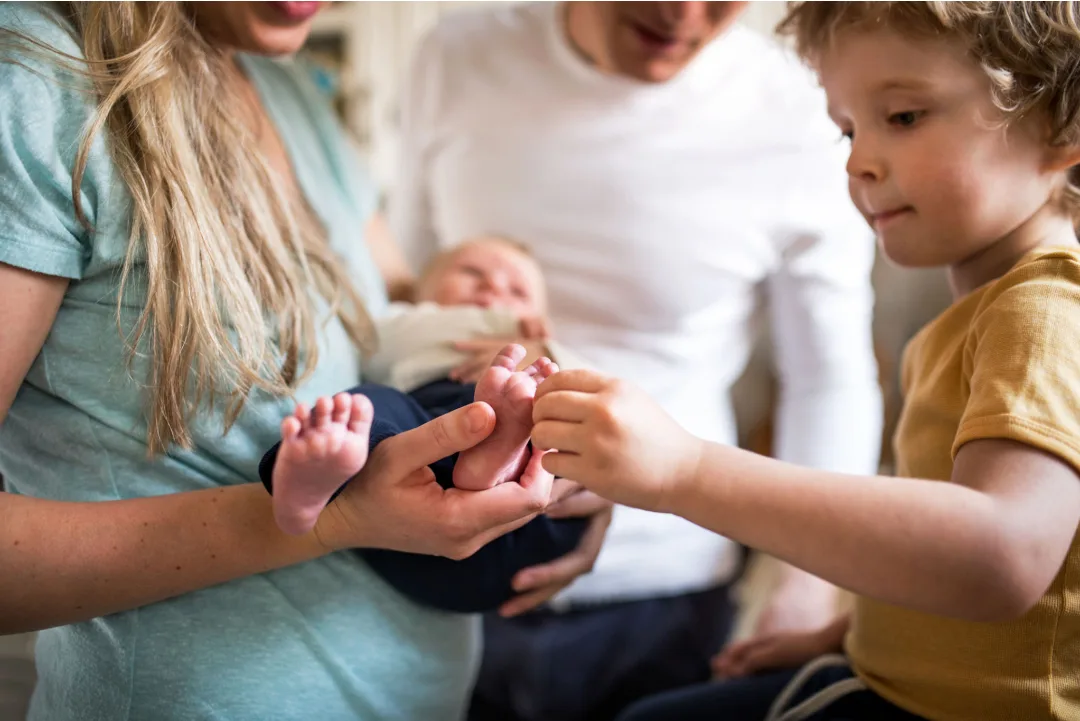
Different ages react differently. It's normal for kids to feel excited, worried, or jealous.
Communication is crucial
Talk openly with your kids about the new baby. Answer their questions honestly.
Involve siblings in the pregnancy
Let kids attend doctor visits, help prepare the baby's room, and choose a gift for the baby.
Prepare for the delivery day
Plan who will take care of your kids during labor. Think about how they'll meet the new baby.
Adjust to life with the new baby
Keep normal routines when possible. Spend one-on-one time with each child.
Build strong sibling bonds
Encourage kids to work together and celebrate each other's achievements.
Seek help if needed
It's okay to ask for support. Motherhood Center offers classes, consultations, and doula services.
Welcoming a new baby into the family is very exciting, but it can be challenging for older siblings. Preparing siblings for a new baby is crucial for a smooth transition and fostering positive family dynamics. At Motherhood Center in Houston, Texas, we understand the importance of this preparation and have been supporting families through this journey for over 20 years. Founded by Gabriela Gerhart, our center offers a wide range of services including prenatal and parenting education classes, yoga and fitness classes, massage services, breastfeeding resources, and postpartum doula services. This guide will share effective strategies for preparing siblings for a new baby, ensuring every family member feels supported and excited about the new arrival.
Understanding Sibling Reactions
Preparing siblings for a new baby begins with understanding how children of different ages might react to the news. Each child's response is unique, influenced by their age, personality, and family dynamics. Recognizing these reactions is crucial for parents to provide appropriate support and guidance throughout the transition.
Age-related responses
Young toddlers may not fully grasp the concept of a new sibling, while preschoolers might show more curiosity or concern. School-age children often have a better understanding but may worry about changes in their role within the family. By recognizing these age-specific responses, parents can tailor their approach to each child's needs when preparing siblings for a new baby.
Common emotions and behaviors
It's normal for siblings to experience different emotions, from excitement to jealousy or anxiety. Some children may regress in behavior or seek more attention from parents. Understanding that these reactions are typical can help parents respond with patience and empathy, making preparing siblings for a new baby more manageable.
Recognizing signs of anxiety or stress
While some emotional responses are expected, excessive worry or behavioral changes might indicate that a child is struggling with the impending change. Parents should be attentive to signs such as sleep disturbances, increased clinginess, or sudden outbursts. Early recognition allows for timely intervention and additional support in preparing siblings for a new baby.
Communication: The Key to a Smooth Transition
Effective communication is fundamental when preparing siblings for a new baby. Open, honest, and age-appropriate discussions can help children feel involved and valued throughout the process. By fostering a supportive environment for dialogue, parents can address concerns and build excitement about the family's new addition.
When and how to break the news
Timing is crucial when sharing the news of a new sibling. For younger children, waiting until the pregnancy is visible or closer to the due date might be appropriate. Older children can be told earlier, allowing more time for processing. When preparing siblings for a new baby, choose a calm moment and use simple, clear language to explain what's happening.
Encouraging open dialogue
Create opportunities for children to express their thoughts and feelings about the new baby. Encourage questions and provide honest answers. This ongoing conversation is essential to preparing siblings for a new baby, as it helps children feel heard and valued during this time of change.
Addressing concerns and fears
Listen attentively to any worries your child expresses and validate their feelings. Offer reassurance about their place in the family and discuss how life might change. At Motherhood Center, our Maternity Consultations with founder Gabriela Gerhart can provide personalized guidance on addressing sibling concerns. Additionally, our New Mom's Meet Up support group provides an encouraging setting where parents can discuss many topics, including strategies for addressing sibling concerns and fears.
Involving Siblings in the Pregnancy Journey
Actively involving siblings in the pregnancy journey is a wonderful way of preparing siblings for a new baby. It helps create a sense of connection and excitement about the upcoming arrival. Parents can foster a positive attitude towards the new family member by including children in various aspects of the preparation.
Attending prenatal appointments
When appropriate, consider bringing older siblings to prenatal appointments. Hearing the baby's heartbeat or seeing ultrasound images can make the pregnancy more tangible for children. This involvement is important in preparing siblings for a new baby, as it helps them feel part of the process.
Helping with nursery preparation
Invite siblings to participate in setting up the baby's room or choosing items for the nursery. This can include picking out decorations, helping to arrange furniture, or selecting toys for the baby. Involving children in these tasks is a practical way of preparing siblings for a new baby, giving them a sense of responsibility and importance.
Choosing a special gift for the baby
Encourage siblings to select or make a special gift for the new baby. This thoughtful gesture helps create a positive association with the baby's arrival. Gift-giving can spark excitement and help siblings view the new baby as someone to care for and cherish. It's also an opportunity for parents to discuss the baby's needs and how the sibling can play a role in meeting them.
Preparing for the Big Day
As the due date approaches, preparing siblings for a new baby includes getting them ready for the delivery day. This preparation can help reduce anxiety and ensure that children feel included in this significant family event.
Creating a birth plan that includes siblings
When developing your birth plan, consider how to involve siblings and discuss options with your healthcare provider. Whether it's having siblings present for part of the labor or arranging a special way for them to meet the baby, including them in the plan is crucial for preparing siblings for a new baby.
Arranging care during labor and delivery
Organize reliable childcare for siblings during labor and delivery. Prepare a "sibling kit" with favorite snacks and activities to keep children engaged. Motherhood Center offers professional childcare services, ensuring children are in capable hands during this crucial time. Our experienced caregivers maintain familiar routines and provide comfort, easing the transition for siblings.
Planning the first meeting between siblings and baby
The arrival of a new baby brings significant changes to family dynamics. Preparing siblings for a new baby doesn't end with the birth; it's an ongoing process of adjustment and support. By maintaining routines and fostering positive interactions, parents can help all children feel secure and valued in their new family structure.
Maintaining routines and one-on-one time
Strive to keep established routines as much as possible, particularly for younger children. Carve out special one-on-one time with each sibling to reinforce their importance in the family. Motherhood Center’s postpartum doulas can help maintain household routines, allowing parents more time to focus on preparing siblings for a new baby and nurturing individual relationships.
Encouraging helping behaviors
Involve siblings in age-appropriate tasks related to baby care. This could include fetching diapers, singing to the baby, or helping with bath time. Encouraging these helping behaviors is an effective way of preparing siblings for a new baby, as it promotes bonding and a sense of responsibility.
Dealing with regression and jealousy
It's common for siblings to exhibit regressive behaviors or show signs of jealousy after the baby's arrival. Address these feelings with patience and understanding. Offer extra cuddles and reassurance, and avoid comparisons between siblings. In our New Mom's Meet Up at Motherhood Center, we’re open to discussing strategies for managing these challenges and preparing siblings for a new baby.
Building a Strong Sibling Bond
Fostering a strong bond between siblings is an ongoing process that begins with preparing siblings for a new baby and continues throughout childhood. By encouraging positive interactions and creating shared experiences, parents can lay the foundation for lifelong sibling relationships.
Fostering a sense of teamwork
Encourage siblings to work together on age-appropriate tasks or projects. This could be as simple as cooperating to tidy up toys or preparing a surprise for parents. Promoting teamwork is an extension of preparing siblings for a new baby, as it reinforces their connection and shared role in the family.
Celebrating milestones together
Involve older siblings in celebrating the baby's milestones, such as first smiles, first steps, or first words. Simultaneously, continue to celebrate the older children's achievements. This balanced approach reinforces the importance of each child in the family unit.
Creating shared experiences and memories
Plan activities that all siblings can enjoy together, adjusting for age differences as needed. This might include family game nights, outings to the park, or special traditions unique to your family. At Motherhood Center, we offer various classes and activities that can involve multiple siblings, providing opportunities for shared experiences.
Conclusion
Preparing siblings for a new baby is a journey that requires patience, understanding, and open communication. By involving children in the pregnancy process, addressing their concerns, and fostering positive interactions, parents can help create a smooth transition for the entire family. Remember that each child's adjustment is unique, and it's okay to seek support when needed.At Motherhood Center, we're committed to supporting families through every stage of this exciting journey. From our prenatal classes and Maternity Consultations with Gabriela Gerhart to our postpartum doula services and New Mom's Meet Up, we offer resources to help you navigate the challenges and joys of welcoming a new baby into your family.Reach out to the Motherhood Center today for personalized guidance and support in preparing your family for your new arrival. Our experienced team is here to help you create a positive and nurturing environment for all your children. Contact us today to learn more about our services and how we can support your growing family.
FAQs
At what age should I start preparing my child for a new sibling?
It's best to start preparing siblings for a new baby as soon as you feel comfortable sharing the news. For younger children, this might be when the pregnancy is visibly noticeable, while older children can be told earlier. The key is to allow enough time for adjustment before the baby arrives.
How can I help my older child feel special after the baby arrives?
Maintain regular one-on-one time with your older child, involve them in caring for the baby, and continue to celebrate their achievements. Consider giving them a special "big sibling" gift when the baby arrives and involve them in decision-making processes when appropriate.
What if my child shows signs of jealousy or resentment?
These feelings are normal. Acknowledge your child's emotions, provide extra attention and reassurance, and involve them in baby-related activities. If concerns persist, consider seeking guidance from professionals or your pediatrician.
How can I involve my toddler in caring for the new baby?
Assign simple, age-appropriate tasks such as fetching diapers, choosing the baby's clothes, or singing lullabies. Always supervise interactions and praise your toddler's gentle behavior and helpfulness.
When should I seek professional help if my child is struggling to adjust?
If your child shows persistent behavioral changes, regression, or signs of anxiety or depression that don't improve with time and your support, it may be time to seek professional help.
Welcome to Motherhood Center! We're glad you're here and want you to know that we respect your privacy and your right to control how we collect and use your personal data. Please read our Privacy Policy to learn about our privacy practices. Privacy Policy