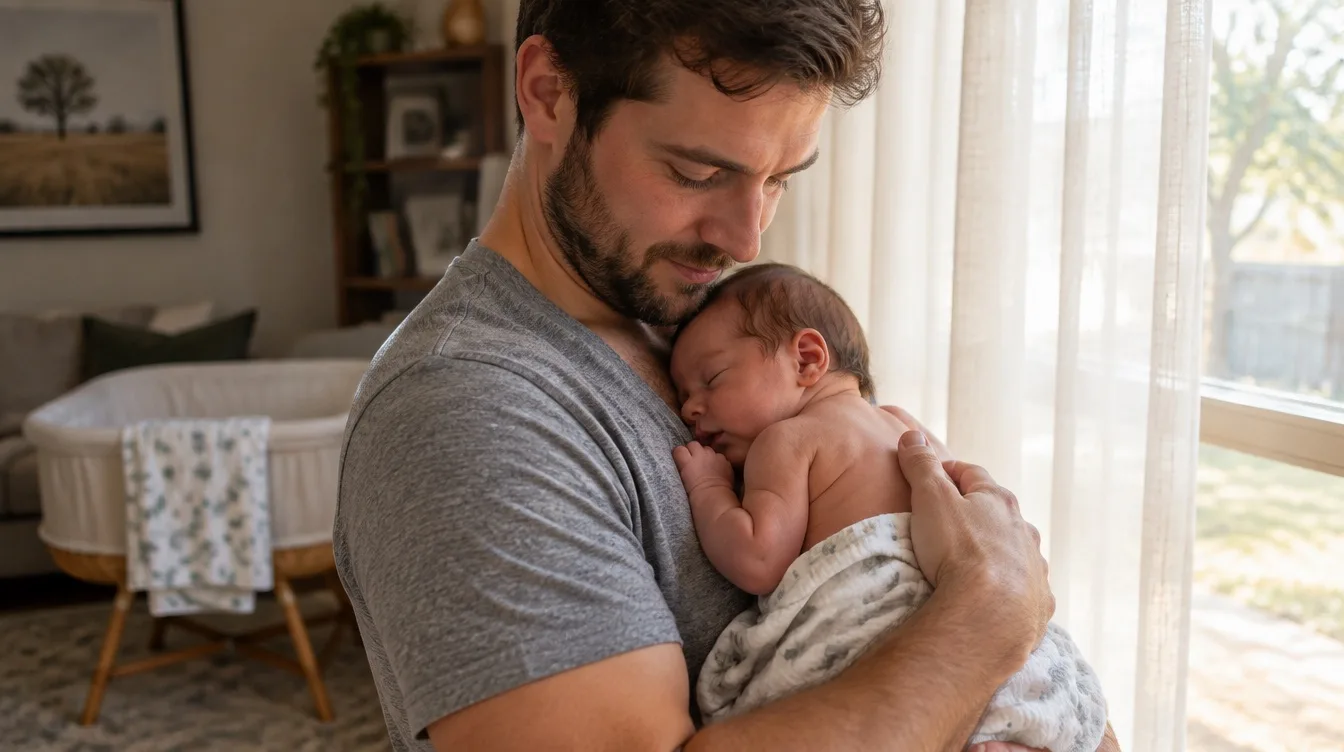
Beyond the six-week checkup: why every new mom needs a village
Gabriela Gerhart joined the Beyond Silos podcast to talk about what happens after the six-week checkup, the quiet signs a new mom needs help, and how family can step in.
November 24, 2026
A new mom can pass her six-week checkup and still be struggling at home. Our founder, Gabriela Gerhart, recently joined Dr. Lauren Pasqua on Beyond Silos: Conversations in Maternal Mental Health to talk about what happens after that appointment, and who is watching out for mom.
One note before we begin: Motherhood Center is not a mental health provider, and this article isn't medical advice. If you're worried about how you feel, talk with your doctor or a licensed mental health professional.
Recovery doesn't end at six weeks
For most moms, the six-week visit is the last scheduled appointment after birth. Gabriela's question is a simple one: who is checking on her after that?
She described a mom who arrives at her checkup with her hair done and clean clothes on, and tells the doctor everything is fine. Then she goes home, where the people around her may not understand what she's going through. Pregnancy and the postpartum period last far longer than six weeks, and a lot can be missed in between.
The missing handoff
When a mom needs more support, she is often left to find it herself in a directory. Gabriela believes a referral from someone she already trusts makes all the difference. "You will be in great hands" means more when it comes from a person who knows her story, and she doesn't have to spend hours explaining it again, sometimes after a difficult birth or a NICU stay.
Dads go through a major change too. As Gabriela put it, they are often "a little forgotten."
"Pregnancy is a community event"
Support in pregnancy and the early weeks can look like a luxury. Gabriela sees it differently: "For some of the services it can feel like a luxury, but it truly is a necessity."
A new baby changes the whole family. Parents become grandparents, friendships shift, and a mom's needs change overnight. The support she receives early on shapes her wellbeing, and her family's, for years. That is why Motherhood Center was built as a village, where expecting and new parents meet other people in the same season of life and real friendships form.
How a yoga class helped one mom see what was wrong
About 20 years ago, a Mom & Baby Yoga instructor stepped out of class and asked Gabriela to stay and talk with one of the moms afterward. The mom's baby was three or four months old.
Before the tears came, she told Gabriela she had realized something was off. Watching the other moms talk and respond to their babies made her see that her own experience was different. Gabriela referred her to a therapist, and she was treated for postpartum depression. The two are still friends, and that mom has offered ever since to talk with any mother who needs it.
Small signs that it's time to ask for help
Gabriela shared a second story. A client used to love visiting the flower shop and building bouquets. A few months after her baby arrived, she told Gabriela she couldn't care less about flowers. That one change was what led her to ask for help.
Signs like these can be easy to miss:
Something you loved no longer brings you joy.
You feel different from the other new moms around you.
You can't sleep, even when someone you trust is caring for the baby. Our postpartum doulas are trained to notice this.
You look fine at appointments but struggle at home.
In Gabriela's words: "It could be just that little simple thing" that helps a mom raise her hand.
How partners and grandparents can help
Often the person who notices first is an aunt, an uncle or a grandmother, and they may not know what they are seeing. Gabriela's idea is a simple handout that goes home from the doctor's office for the partner and extended family: here is what to watch for, here is how to support me, and you have my permission to say something.
Until that exists, families can start with a kind, direct question: "How are you really doing?" Then listen, and help her make the call.
What happens after the six-week postpartum checkup?
For many moms, the six-week visit is the last scheduled appointment after birth, even though recovery and adjustment continue for much longer. If something doesn't feel right after that visit, you don't have to wait for another appointment. Call your doctor and tell them how you're feeling.
What are early signs that a new mom may need more support?
The signs can be small: losing interest in something she used to love, feeling different from other new moms, or not being able to sleep even when the baby is cared for. None of these is a diagnosis. They are reasons to check in with a doctor or a licensed mental health professional.
How can partners and grandparents help a new mom?
Pay attention to changes in her mood, sleep and interest in everyday things. Ask how she is really doing, listen without judgment, and offer to help her contact her doctor or a therapist.
Does Motherhood Center offer mental health care?
No. Motherhood Center is not a mental health provider. We offer classes, meetups, doulas and newborn care, and our team can point families to trusted Houston professionals when more support is needed.
If you think you may have postpartum depression or anxiety, call your doctor. You can also call or text the National Maternal Mental Health Hotline at 1-833-TLC-MAMA (1-833-852-6262), free and available 24/7. If you are in crisis, call or text 988.
Welcome to Motherhood Center! We're glad you're here and want you to know that we respect your privacy and your right to control how we collect and use your personal data. Please read our Privacy Policy to learn about our privacy practices. Privacy Policy